01Sam Katz, PhD · Computational biologist and immunologist

Building and testing the evidence that connects a biotech vision to its scientific claims.

Founders start with a vision. Investors are handed a claim. I help founders build the scientific foundation that turns a vision into evidence, and I test whether the evidence behind a claim holds up.

02From vision to claim

From vision to claim

Fig. 2.1
Founders · Discovery teams Build
1Vision
What the company believes its science will do.
2Evidence
2.1 What data would settle it
2.2 How to generate it
2.3 How to analyze it
3Claim
What the company tells investors its data shows.
Test Investors
Founders and discovery teams build the evidence. Investors test it.

Every biotech company starts with a vision of what its science will do. At some point that vision has to become a scientific claim, and the only thing that connects the two is evidence.

For founders and discovery teams, I build that evidence, the scientific foundation a company can launch on. I work out what has to be true for the vision to work, what data would show it, how to generate it, and how to analyze it so the result holds up.

For investors, I test it. I check whether the evidence behind a claim actually supports it, and what the data can't yet show.

I start from the decision and work back to the data.

03Services

What I build and test depends on where you sit.

For investors
S-011

Scientific diligence

Test the evidence behind a claim before you commit.

Is the mechanism plausible? Is the data sound, and was the experiment designed to answer the question it claims to answer? Does the evidence support the milestone this round is meant to fund?

You get

A written assessment with a clear verdict on each claim, the risks ranked by how much they matter to the investment, and the questions to put to the founders.
For founders
S-022

A scientific foundation to build on

Turn your vision into science a company can launch on.

For founders turning a scientific idea into a company, including those coming from engineering, software, or outside biology. I help you pin down what has to be true for the vision to work, design the experiments and data that will show it, and build the scientific case your first hires, partners, and investors can stand on. Along the way I review your evidence the way a diligence reviewer would, so you find the holes before investors do. Each piece of the roadmap is scoped as its own project.

Additionally, I can help position your company so it can recruit high-impact scientific collaborations. We work together on which scientists you want to reach and how you can be best positioned to make the collaboration happen.

You get

A scientific roadmap from vision to first proof points, the study designs and data plan behind it, and where it helps, a white paper built on the literature.

For discovery teams
S-033

Data and target prioritization strategy

Generate the evidence your claim will need, in a data structure you can use, fed into a pipeline that answers your question with rigor.

I work out what the decision is, what evidence would settle it, and what the data needs to look like to provide that evidence. When you already have a long list of candidates, I build a biologically grounded way to rank them, so the lab tests the few most worth testing.

You get

A data and metadata plan, a prioritization approach you can rerun as new data arrives, and the reasoning behind every ranking.

S-044

AI for bio, when it's useful

The deterministic layer your models depend on.

Models inherit every flaw in the data underneath them. I build the QC rules, metadata standards, and validation checks first, so every model output traces back to the data behind it. This ensures the verifiable, traceable layer on which any additional AI pipeline will be built.

You get

Working, documented pipelines and the rules behind them, written so your team can own them.

04Expertise

Where I'm most useful

I work across biotech, and I go deepest in these areas.

4.1 Immunology How the immune system recognizes foreign and altered cells, across cancer, infection, and transplantation. Biomarkers and patient stratification for immune-driven therapies.
4.2 Oncology Tumor-immune interactions, response and resistance, mechanism of action (MOA), and which patients a therapy is likely to work in.
4.3 Candidate prioritization Narrowing long lists from screens, omics, or cross-species genome comparisons to the few worth testing.
4.4 Translation across models Whether a finding in one species, cell type, omics layer, or model system is likely to extrapolate.
4.5 Splicing and isoform biology Isoform-level effects of disease and of therapies, including long-read sequencing.
Table 4.2Core skills
  • Mechanism of action in oncology
  • Immunology signaling
  • Regulation of complex pathways
  • Multi-omic data QC & harmonization
  • ML pipeline eval
  • Target discovery
  • Biomarker analysis
  • Scientific pipeline development
  • Biological interpretation
  • R&D collaborations
05Selected work

Selected work

Client names are withheld. Each card shows the question, what I did, and what it made possible.

W-01Women's health wearables
The question

An engineering team had a working product and a clear clinical need; the scientific case needed to be articulated.

What I did

Wrote a white paper grounded in the clinical literature and the study to test the product's claims.

What it enabled

A science narrative the team could take to partners and investors, and an opening for engaging scientific collaborators.

W-02Genomics foundation model
The question

Was the model's predictive power coming from biology, or from gene duplication in the plant genomes it was trained on?

What I did

Built a test that hid duplicated genes from the model and compared its performance with and without them.

What it enabled

A direct answer to the first question a skeptical reviewer would ask before the model moved toward human genomes.

W-03CRO data, agentic analysis
The question

An AI agent kept failing every time dosing or protocol details changed in incoming data from a partner CRO (Contract Research Organization).

What I did

Built a deterministic QC pipeline that formats expected possible variation consistently before the agent sees it.

What it enabled

An analysis layer that keeps working as the experiments change.

Before independent practice
Immunai

Built the QC pipeline that decided which incoming patient data was fit to train the company's immune atlas, and led the immunology side of external pharma collaborations on biomarkers and patient stratification.

Verily

Immunology lead on the target-discovery program that produced a nominated autoimmune candidate (in partnership with Nxera), and data interpretation for a multi-omic COVID-19 progression study with Janssen, linking early immune signatures to a measured clinical outcome.

SIGNAL

Built during my PhD at Cambridge and the NIH to help researchers decide which genes to follow up from long candidate lists. Published in Cell Systems and now hosted independently by HHS at signal.niaid.nih.gov.

06Engagements

How engagements work

Every engagement has a defined scope, a fixed fee or an agreed hourly structure, and milestone dates you can plan around.

  1. 1

    A first call.

    We talk through the decision you're facing and whether I'm the right person for it.

  2. 2

    A written proposal.

    Scope, deliverables, milestone dates, and the fee, with the reasoning behind it.

  3. 3

    The work.

    Regular check-ins, and early warning if the data points somewhere unexpected.

  4. 4

    Delivery.

    A written deliverable, a walkthrough call, and one consolidated round of revisions.

If I'm not the best fit in my network, I recommend the person who is.
Table 6.1Engagement shapes
ShapeBest for
E-1Fixed-scope project A scientific roadmap, a study design, a white paper, a deck review, a diligence assessment
E-2Phased project Data strategy or prioritization work where the unknowns become clear partway through. Phase 1 is priced up front, and Phase 2 is confirmed at a go or no-go gate.
E-3Diligence retainer Investors who need a scientific read on deals throughout the quarter
E-4Advisory seat Founders who want a scientist alongside them as the company takes shape, for a set number of sessions a year
E-5Expert call One focused question that an hour of conversation can answer

ScopeI don't provide regulatory, reimbursement, valuation, or legal advice. My work informs your decision. It doesn't replace your own diligence.

FeesFees are fixed for defined work and quoted after an initial scoping call.

07Principles

How I work

1

Independent by design.

I take no success fees on diligence and no equity in companies I assess for investors. My only stake is in getting the answer right.

2

Honest about what the data can't support.

Every dataset has limits. Saying where they are is part of the deliverable, not a footnote.

3

AI for bio when it's useful, human for bio when it's better.

I'm a biologist who uses AI, not an AI researcher looking for a biology problem. If a linear regression beats a language model, I use the regression.

08About

About me

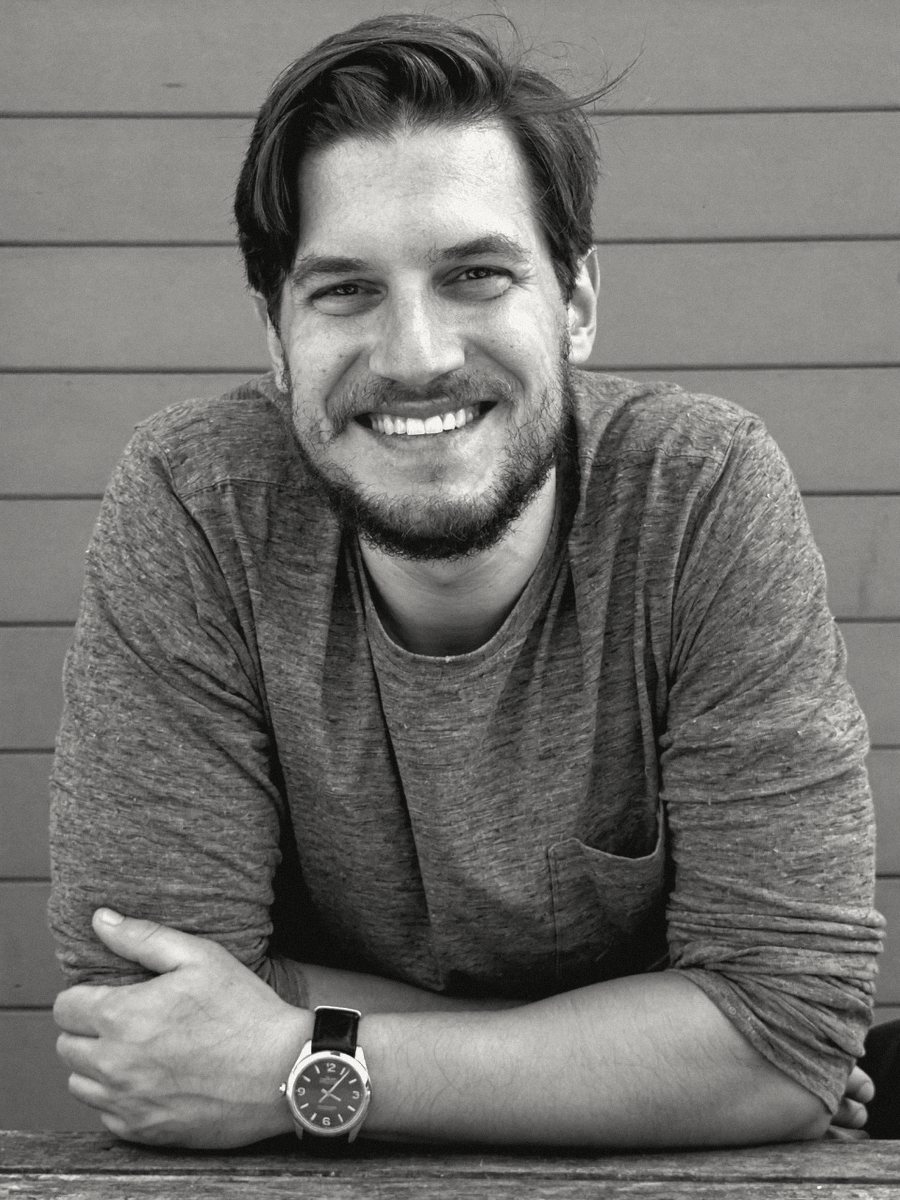
Sam Katz, smiling, arms folded on a wooden table in front of a slatted wall
Fig. 8.1Sam Katz, PhD

I'm a computational biologist and immunologist, and I run Sam Katz PhD LLC, an independent practice for biotech investors and founders.

I came to computation from the bench. At the start of my PhD I had a long screen of hits and no sound way to decide which to follow up, so I built one, first in Excel and then in R. I've been working on versions of that problem ever since. At the University of Cambridge, in partnership with the National Institutes of Health, I built SIGNAL, a tool that helps researchers prioritize genes from long candidate lists. It was published in Cell Systems and is now hosted independently by HHS.

In industry I worked at Verily (Alphabet) and then Immunai, where I was a senior scientist in systems immunology. I led the immunology and computational biology side of external pharma collaborations, worked on biomarker and patient stratification programs, and built the QC pipeline that decided which incoming patient data was fit to train on.

The thread through all of it is the gap between what a team hopes is true and what its data can show. I've spent my career building evidence across that gap, and being honest about where it stops.

09Writing

Writing

I write about the central problem of modern biology, that we can now measure far more than we can understand.

P-01 · Essays

The Gene List

Essays on the modern challenge of high-throughput biological data. Why more measurement doesn't automatically mean more understanding, and what it takes to turn data into decisions.

Read The Gene List →
P-02 · Notes

Margin Notes

Shorter thoughts and ideas from the field, written as they come up.

Read Margin Notes →
For authors

Science consulting for authors

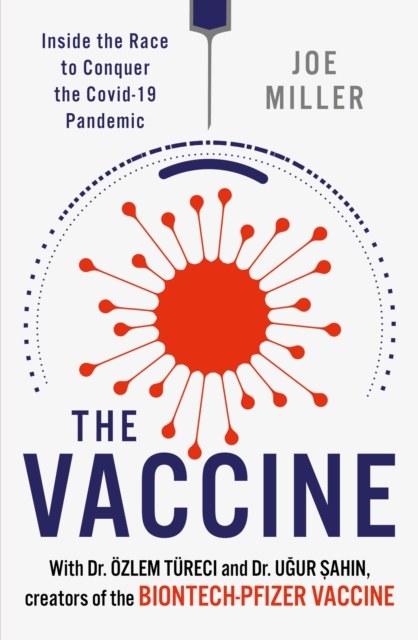
Cover of The Vaccine: Inside the Race to Conquer the Covid-19 Pandemic by Joe Miller, with Dr. Özlem Türeci and Dr. Uğur Şahin
B-01

The Vaccine: Inside the Race to Conquer the COVID-19 Pandemic

Joe Miller with Özlem Türeci and Uğur Şahin · St. Martin's Press, 2022

I help writers get the science right. For The Vaccine, the story of BioNTech's mRNA vaccine, I helped the author understand the science behind it. I've also consulted on children's books that explain the immune system and vaccines.

From the book's acknowledgments: Sam Katz, one of the NIH's most brilliant scientists, helped me understand what an assay was, and much more besides.
Fig. 9.1 · From the acknowledgments of The Vaccine
10FAQ

Questions

Q-01 Who do you usually work with?

Venture and private equity investors evaluating biotech deals, founders building a company on new science, and early-stage discovery teams deciding what data to generate. Most clients are between discovery and their first major financing.

Q-02 What if my area isn't immunology or oncology?

The core of diligence, checking whether the evidence supports the claim, applies across biology. If your question needs a specialist I'm not, I'll say so on the first call and point you to someone who is.

Q-03 Will you sign an NDA?

Yes, before we discuss anything confidential.

Q-04 How quickly can you start?

Usually within a few weeks.

Q-05 Can you be our head of science or fractional CSO?

No. I build specific pieces of the roadmap, such as a study design, a data plan, or a diligence assessment, each scoped as its own project. That keeps my assessments independent, and it means each piece is finished and handed over for your team to own.

Q-06 Can my investment committee rely on your report?

It is one input to your decision. I give a clear view of the science and its risks, but the investment decision and the rest of the diligence stay with you.

Q-07 Where are you based?

I work remotely with teams in the United States and Europe.

11Contact

Start a conversation

If you're turning a scientific vision into a company, or testing the evidence behind a claim you've been handed, send me a short note on the decision you're facing.

Form 11-AOr write it here
I am a...